

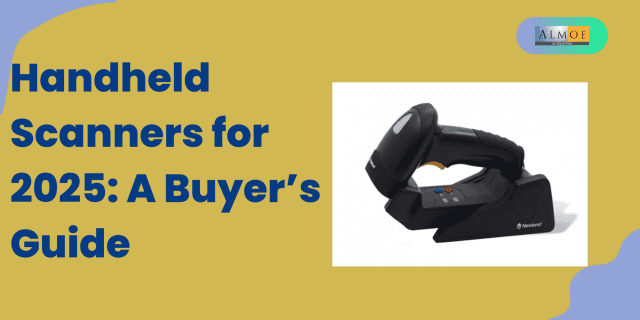
Handheld scanners are versatile tools that can help you efficiently scan documents, barcodes, and images on the go. With many options available on the market, choosing the best one for your needs can be challenging. In this guide, we'll break down the different types of handheld scanners to help you make an informed decision. We'll focus on features, ease of use, price, and customer feedback.
1. Portable Document Scanners
Best for: Scanning Documents on the Go
Features: Portable document scanners are lightweight, compact devices designed to scan documents quickly and efficiently. Many come with a built-in rechargeable battery, making them ideal for users who need to scan documents while traveling or away from a desk.
Ease of Use: Easy to set up and operate, typically featuring one-touch scanning for fast results.
Price Range: Budget-friendly to mid-range
Customer Feedback: Users appreciate their portability and convenience, though some may find the scanning speed slower when handling large volumes.
2. Wireless Barcode Scanners
Best for: Retail and Warehouse Environments
Features: Wireless barcode scanners are designed for quickly and efficiently scanning barcodes, whether in a retail store, warehouse, or inventory management setting. These scanners connect wirelessly to your computer, tablet, or POS system, making them highly flexible.
Ease of Use: Simple to operate with plug-and-play functionality, and often lightweight for extended use.
Price Range: Affordable to mid-range
Customer Feedback: Great for businesses that rely on barcode scanning. Users praise them for being reliable and easy to set up, although they may not be suitable for non-barcode scanning tasks.
3. High-Speed Office Scanners
Best for: Heavy-Duty, High-Volume Scanning
Features: High-speed office scanners are built to handle large volumes of documents. These scanners often come with automatic document feeders (ADF), allowing you to scan dozens of pages at once. They typically offer double-sided scanning, making them ideal for office environments.
Ease of Use: Simple interface with touchscreen controls or button functionality for quick operation. Suitable for offices where efficiency is key.
Price Range: Mid-range to premium
Customer Feedback: Highly rated for their fast scanning speed and ability to manage high volumes of documents, though they can be bulkier than more portable options.
4. Mobile Scanners
Best for: Scanning with Smartphones and Tablets
Features: Mobile scanners are small, portable devices that sync with your smartphone or tablet to scan documents, barcodes, and images. These scanners often connect via Bluetooth or USB and are ideal for those who need a quick, mobile scanning solution.
Ease of Use: Mobile apps typically manage the scanning process, providing a user-friendly experience. These scanners are also perfect for those who need to scan while traveling or in remote locations.
Price Range: Budget-friendly to mid-range
Customer Feedback: Great for portability and ease of use, but some users find they lack the features or speed of more robust scanners.
5. Photo and Image Scanners
Best for: Scanning Photos, Artwork, and Graphics
Features: These scanners are designed to capture high-quality images, making them perfect for scanning photos, artwork, or illustrations. Many come with higher resolution capabilities for sharp, detailed scans.
Ease of Use: They usually include software for editing and enhancing scanned images, making them ideal for photographers, artists, and creatives.
Price Range: Mid-range to premium
Customer Feedback: Users love the image quality and accuracy, but they may be slower than document scanners and are often larger in size.
6. OCR (Optical Character Recognition) Scanners
Best for: Converting Text into Editable Digital Files
Features: OCR scanners can scan documents and convert printed text into editable, searchable digital text. They are especially useful for businesses or individuals who need to digitize large volumes of paper and need the text to be easily searchable.
Ease of Use: Typically comes with software that automatically processes the scan into text. Some models allow users to edit the text post-scan for better accuracy.
Price Range: Mid-range to high-end
Customer Feedback: Highly valued for their ability to save time in digitizing documents, though some scanners may struggle with unusual fonts or handwriting.
7. Compact Scanners
Best for: Small-Scale, Portable Document Scanning
Features: Compact scanners are ultra-portable and designed for people who need to scan documents without taking up much space. These scanners typically have a small footprint, making them perfect for tight office spaces or for those who need a portable option.
Ease of Use: Easy to set up with intuitive interfaces, but scanning may be slower than larger models.
Price Range: Budget-friendly to mid-range
Customer Feedback: Perfect for those who need something small and easy to store, though users may sacrifice speed and advanced features in exchange for portability.
8. Heavy-Duty Document Scanners
Best for: Businesses and Offices with High Scanning Needs
Features: These scanners are designed for high-volume, professional use. They are typically capable of scanning hundreds of pages per day and often include features like automatic page feeders and duplex scanning. They're ideal for legal firms, medical offices, or other businesses with large scanning needs.
Ease of Use: Usually easy to operate with clear settings for batch scanning, although the setup might be more complex for beginners.
Price Range: Premium
Customer Feedback: These scanners are praised for their durability and speed but can be overkill for those with low-volume scanning needs.
9. Flatbed Scanners
Best for: High-Quality Document and Photo Scanning
Features: Flatbed scanners allow you to scan books, magazines, photos, and other materials that may not fit through an automatic document feeder. They provide high-quality scanning results, especially for images and delicate documents.
Ease of Use: Simple to use, though they are bulkier and slower than other handheld options.
Price Range: Mid-range to high-end
Customer Feedback: Ideal for high-quality scans of photos and documents, but they take up more space and may not be as fast as other scanners.
10. Scanners with Cloud Integration
Best for: Seamless Cloud Document Management
Features: These scanners are designed to upload scanned documents directly to cloud storage services like Google Drive, Dropbox, or OneDrive. They allow for easy sharing and collaboration without the need for a computer.
Ease of Use: Simple to set up and use, with many models offering one-touch cloud scanning. Ideal for businesses or individuals who need to store and access their documents remotely.
Price Range: Mid-range to premium
Customer Feedback: Users find these scanners incredibly convenient for cloud storage, though some users report occasional issues with wireless connections.
Conclusion
Choosing the right handheld scanner depends on your needs and how you plan to use it. Whether you're looking for portability, high-speed scanning, or image quality, there's a scanner for every situation. Consider your specific requirements—such as whether you need it for documents, barcodes, photos, or cloud storage—before making a decision. By understanding the different types of scanners and their key features, you can select the one that best suits your workflow, budget, and preferences.